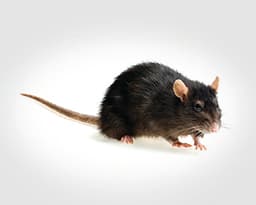
How Can You Identify a Rat Infestation?
Since Norway rats are not typically active during daylight hours, a sighting during the day could signal a large infestation. Often digging holes in lawns, outdoor burrows surrounding a building can indicate Norway rat nests, while other signs include grease stains and chew marks on food or utility lines. Norway rats can also leave capsule-shaped droppings along their frequently traveled pathways. If you see chewed wires or droppings, contact a professional for a rat eradication plan. We offer complimentary, whole-home inspections so that you don’t have to wonder whether your home is infested or wait until the infestation gets out of control. Using the form below, contact us day or night for your home inspection.
How to Get Rid of Norway Rats
Whether they are inside or outside a home, getting rid of Norway rats entails reducing their opportunities to fulfill their three most basic needs: food, water and shelter.
To get rid of rats quickly, make sure garbage cans are covered and emptied often, clean up outdoor bird and pet feces and fix plumbing leaks and outdoor sources of standing water.
Remove debris piles, keep firewood stored away from structures and trim any tree limbs that come in contact with your home. Also remember to seal any holes larger than 1/4 inch, such as those that can be found near windows and doors, dryer vents and chimneys.
Of course, if you have a rat infestation you can seek professional help for the fastest, simplest eradication possible.
Habits of Norway Rats
Preferring to nest in underground burrows, when food sources become scarce outside during the fall and winter, these rats will use their excellent climbing skills to enter buildings in search of food.
Habitat & Nesting Behavior
Living and thriving alongside humans for centuries, Norwegian Water Rats arrived in the United States on British ships in the late 1700s. They flourish in large cities and also thrive by burrowing beneath buildings, embankments and tree roots, or hiding out in basements, crawlspaces, attics and sewers.
Often hiding during daylight hours, Norway rats live in fields, farmlands and inside structures like woodpiles. Due to their agile frames, these rodents can gain entry to homes through holes the size of a quarter.
Voracious omnivores, rats prefer to feed on meat, fruits, grains and nuts, but when times are tighter they will also feed on dead animals, small fish and even other rodents. Starting their colonies close to water, rats live together in groups organized by a dominant and subordinate hierarchy.
Norway Rat Threats
In addition to being carriers of disease, rats can also chew through wiring, causing significant fires. Rats are also notoriously prolific. A single rat sighting is often evidence of an entire colony.
Living approximately one year in the wild, these fruitful breeders can have litters of between four and 22 babies, and a single female can have between three and 12 litters per year.