What Do Fungus Gnats Look Like?
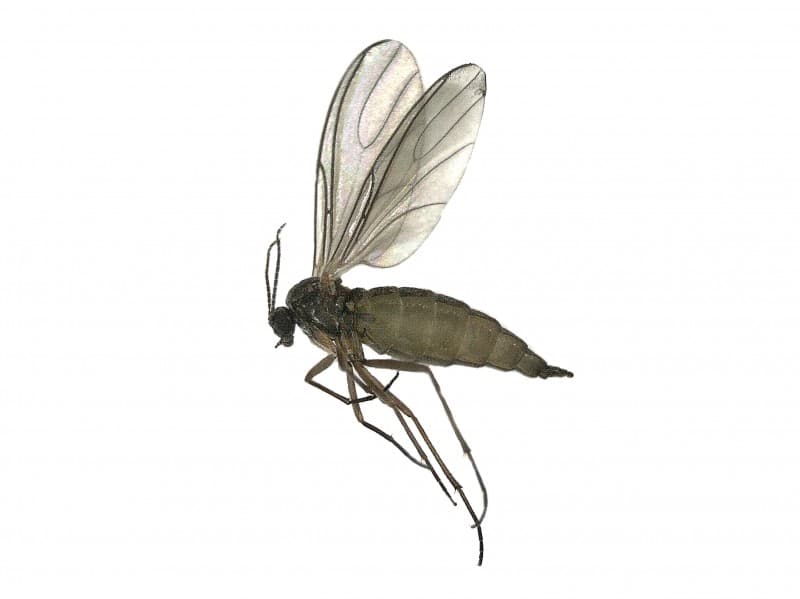
Fungus gnats are dark and delicate-looking. They are similar in appearance to mosquitoes but usually much smaller. Adult fungus gnats have slender legs and segmented antennae that are longer than their head. You can identify them by their light gray or clear-colored wings. Larvae have a shiny black head and an elongated, whitish-to-clear, legless body.
How Do Fungus Gnats Eat?
Though fungus gnats are often found around live plants, they don’t feed on leaves, stems, fruits, or flowers. Larvae prefer to feed on fungus and organic matter in the soil. Sometimes they will chew on roots which may lead to plant damage.
How Long Do Fungus Gnats Live?
Adult fungus gnats live about eight days, and their entire life cycle lasts only about 25 days. The cycle starts with adult females laying eggs in damp soil. Eggs are incubated for about three days. Then larvae complete their development in about 10 days. Afterward, fungus gnat pupae become adults about four days later.
Where Do Fungus Gnats Come From?
Fungus gnats usually get into homes by flying inside or from infested plants brought inside the house. Fungus gnats are also attracted to damp soil, so make sure you properly store potting soil before and during use.
How Can I Get Rid of Fungus Gnats?
Most fungus gnats spend their life cycle in the larva and pupa stage buried in organic matter or soil. If you treat soil during those life stages, most adult fungus gnats will disappear. The presence of fungus gnats is often an indication of overwatering. Look for adult fungus gnats resting on plants, soil, windows, or walls to identify the source of your infestation. If you do have an infestation, you can use yellow sticky traps to catch adults. If that does not work, place chunks of raw potato in pots with the non-peeled side facing down. Severely infested potted plants may need to be re-potted and the infested soil discarded.
Follow these steps to control fungus gnats:
- Place a layer of sand or indoor mulch on top of the soil around plants.
- Introduce Hypoaspis miles mites.
- Apply the biological larvicide Bacillus thuringiensis.
- Saturate the soil annually in an insecticidal soap.
- Mix 3% hydrogen peroxide with four parts water to kill fungus gnat larvae in infected soil.
To prevent fungus gnats from returning, follow these steps:
- Avoid overwatering indoor plants and provide good drainage.
- Allow the surface of container soil to dry between watering.
- Clean up standing water.
- Avoid using incompletely-composted organic matter in potting, unless it is pasteurized first.
- Do not fertilize with excessive amounts of manure, blood meal, or similar organic materials.
- Screen and caulk leaky windows and doors to help prevent pests from coming indoors.
If your fungus gnat infestation continues, contact Arrow Exterminators for a professional pest control plan.