Where Do Silverfish Come From?
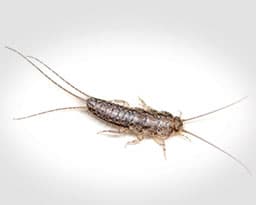
Silverfish usually enter a structure through insulation during construction.
What Do Silverfish Eat?
Silverfish eat a wide variety of foods containing starches and carbohydrates such as rolled oats, dried beef, flour, starch, paper, cotton, some synthetic fibers, sugar, beef extract, dead insects, glue, paste and linen. They can also feed on surface molds in damp areas. They can live long periods of time without food. Eggs are laid in protected areas, such as behind baseboards, and hatch in 20 to 40 days depending on temperature and humidity.
Where Do Silverfish Live?
Silverfish prefer to live in temperatures of 70 to 80 degrees Fahrenheit, moist situations and can be found most anywhere in a house. They are commonly found in attics especially if there are boxes of books.
Silverfish can live long periods of time without food. Eggs are laid in protected areas, such as behind baseboards, and hatch in 20 to 40 days depending on temperature and humidity.
Are Silverfish Dangerous?
Silverfish can do considerable damage to some natural and synthetic fibers, books and other paper products. Their feeding marks are irregular and often appear as a surface etching that may not even penetrate paper. They may also leave yellow stains, especially on linens.
Preventing Silverfish
Silverfish are unable to reproduce or even to survive in buildings where winter heating and moisture loss results in low relative humidity. Airtight houses with efficient humidifiers that keep the relative humidity above 50% year-round can develop silverfish infestations that are very difficult to control using typical insecticide applications. To achieve control under those conditions, the relative humidity will need to be reduced. Besides cleanup of clutter and other food items that may be supporting the infestation, insecticide applications are required for silverfish management.