

Can You Move a Bird Nest? What Homeowners Should Know First
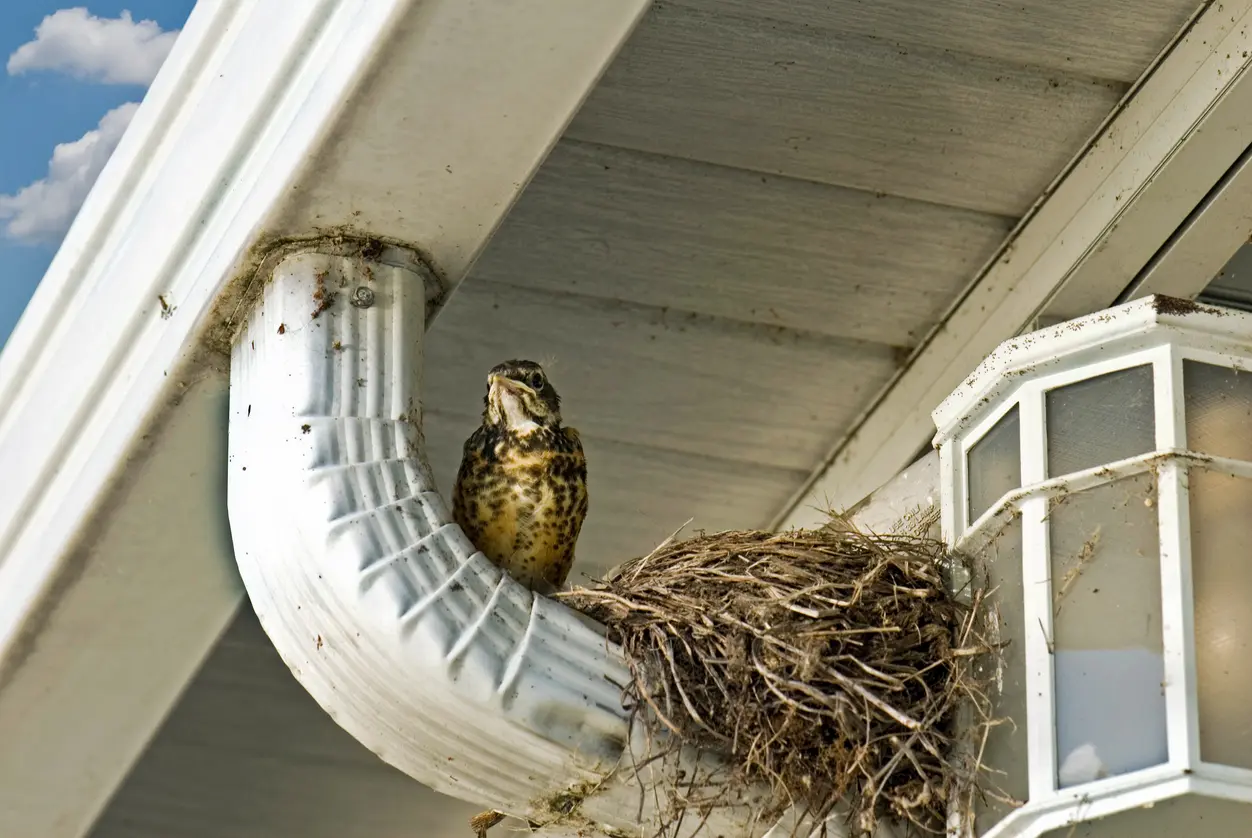
You spot a nest tucked inside your dryer vent and figure it’s an easy fix. Just pull it out and get on with your day, right? Not so fast. That little bundle of twigs may have a family counting on it.
Birds can nest in dryer vents, soffits, porch lights, eaves, attics, and other spots around your home. When they do, it can affect your comfort, your home’s cleanliness, and even your household’s safety. Wanting the nest gone is completely understandable, but removing or moving a nest can harm the birds who live there, especially if eggs or chicks are inside.
That’s where we come in. Our bird control approach starts with an inspection and identification, followed by humane exclusion planning and prevention to help keep birds from nesting in the wrong spot again.
Can You Remove a Bird Nest From Your House
It depends on the bird species, whether the nest is in use, and where the nest is located. In general, a nest with eggs, chicks, or young that still depend on it should be left alone. Removing an inactive nest isn’t automatically risk-free either, so you’ll want to rule out eggs, chicks, and ongoing use first.
When in doubt, do not touch the nest.

Why Bird Nests Are Protected
A nest is a nursery. Eggs need steady warmth, and chicks depend on their parents for food until they’re ready to leave. That’s why a nest counts as active if it holds viable eggs or chicks, and it stays in use until the young no longer depend on it. A nest that looks quiet for an afternoon may still be very much occupied.
Most native birds, including robins, swallows, and house finches, are also protected by federal law under the Migratory Bird Treaty Act, which covers their nests and eggs. Rules vary by species and state, so the U.S. Fish & Wildlife Service is a good place to learn more.
How to Tell Whether a Bird Nest Is Active or Abandoned
Just because you don’t see a bird doesn’t mean no one’s home. Parents leave the nest to find food, and some species spend surprisingly little time sitting on it during the day.
If you’re curious about what’s going on, watch from a respectful distance, like a window or the other side of the yard. Repeated close checks can stress the birds and may even keep parents away from the nest. There’s also no universal waiting period that works for every bird, since nesting behavior varies by species.
An empty-looking nest can be deceptive too. It may be under construction or used on and off, with the owners dropping by between trips for supplies.
If you see eggs or chicks, or if adults keep returning to feed young or defend the area, don’t touch the nest. The same goes for a nest inside a cavity, attic, vent, wall void, or another spot you can’t safely see into. In any of these cases, get guidance from a professional or your state wildlife authority.
Active Nest vs. Inactive Nest at a Glance
Active or in use: You might see eggs, chicks, feeding activity, or young that still depend on the nest. Don’t move or remove it, and keep people and pets away. If there’s a safety issue, seek guidance from a professional or your state wildlife authority.
Uncertain: The nest may be hard to inspect, sit inside a vent, attic, or cavity, or show activity that’s tough to read. Don’t handle it. Arrange an inspection or contact the appropriate wildlife resources.
Inactive or empty: There are no eggs or chicks, and no current breeding use can be confirmed. Check for any local or species protections before taking action. Only try to prevent rebuilding once you know the site is clear.

Removing a Bird Nest With Eggs vs. an Empty Nest
A nest with eggs and an empty nest are two very different situations, and the right move changes depending on which one you’re looking at. When you’re not sure which one you have, treat it like the first.
Do not move or remove a nest that has eggs, chicks, or young that still depend on it.
Do not keep a nest, eggs, feathers, or bird remains as a souvenir. It may be tempting, but wild bird items are best left in nature.
Do seek qualified help when you can’t tell whether a nest is in use or when a health or safety condition is involved.
What to Do If Birds Are Nesting in an Attic, Vent, or Other Part of Your Home
Now let’s talk about what happens when the nest isn’t on a porch light you can see from the driveway. Attics, vents, and other openings in your home are a different story. They’re hard to inspect safely, and they can come with extra concerns like droppings and nesting debris, fire risk from blocked airflow, or a bird that has gotten trapped inside. This is where a trained set of eyes really helps.
Birds in Attic Removal Starts With an Inspection
Scratching, fluttering, or chirping in the attic doesn’t always mean birds. Squirrels, mice, bats, and other wildlife can make similar sounds and leave similar debris, so identifying who’s actually up there matters before anything else happens.
It also matters because of timing. If you seal an entry point while birds or young are still inside, they can end up trapped, and that’s a bad outcome for the bird and your home. We recommend waiting to close up openings until a trained professional confirms that no birds or dependent young remain.
When we handle birds in attic removal, we start with an inspection to learn how wildlife is getting in. Then we repair the underlying access point and build a plan to keep it from happening again, because removing birds without fixing the opening just leaves the door open for the next tenant. Our wildlife control and bird control teams work together to sort out what’s going on and what comes next.

Bird Removal From a Vent, Including Dryer and Exhaust Vents
Vents make attractive nesting spots because they’re warm, sheltered, and tucked out of the way. Unfortunately, they’re also where a nest can cause the most trouble.
A nest that blocks a dryer vent can hinder how well your dryer works and may create a fire concern. If you suspect a nest is blocking exhaust airflow, stop running the dryer until the vent can be checked.
Even with that safety concern, birds, eggs, or nestlings may be inside, and you can’t always see them from the opening. That’s why we recommend an inspection before anything is removed, whether the vent is inside your home or on the outside wall.
For bird removal from a vent, we recommend a professional inspection first. Once the site is confirmed clear, we can time the exclusion appropriately and install a proper vent cover that keeps airflow moving and keeps birds out.
Can You Relocate a Bird Nest?
The short answer is no, not on your own. Homeowners shouldn’t attempt to relocate bird nests, even when the spot the birds picked is a real headache.
It might seem like a fair compromise to scoot the nest a few feet over to a better location. But relocating a bird’s nest can do more harm than good. Moving it can separate parents from their young, disrupt breeding, and leave the nest abandoned.
That doesn’t mean relocation is never on the table. It’s just not a DIY project. In limited, urgent situations, moving a nest may be an option, but only with guidance from a qualified bird-control professional and your state wildlife authority.
Some situations can feel like emergencies, and it’s natural to want to step in and save the nest. If any of these sound familiar, reach out for help instead of moving it yourself.
- A bird is trapped inside your home.
- A nest has been damaged.
- There’s a credible health or safety issue tied to the nest.

Humane Ways to Discourage Birds From Nesting on a Porch
The best time to discourage nesting is before it starts, or after you’ve confirmed a nest is no longer in use. Once birds have settled in, it’s best to leave them be until the young have left. Until then, a little prevention goes a long way.
Here are some humane, non-harmful ways to make your porch and the rest of your home less appealing as a nursery.
- Repair damaged screens, soffits, fascia, and trim so small gaps and loose boards don’t look like open invitations.
- Address gaps around vents and roofline openings to keep birds and other wildlife from moving in.
- Use properly installed vent covers or guards designed to keep birds out while still letting air flow freely.
- Reduce ledges and sheltered nooks on porch light fixtures, beams, and corners with professionally selected exclusion methods that don’t harm the birds.
- Keep bird feeders away from the house so a nearby buffet doesn’t make your porch look even better.
How to Prevent Birds From Rebuilding a Nest in the Same Spot
Birds are creatures of habit, and a spot that worked once can look just as good the next season. If you want to keep a nest from popping back up, these are the steps to follow.
- Confirm the nest is no longer active. Make sure no birds or young still depend on the site before you do anything else.
- Have the area cleaned or addressed if needed. Droppings, nesting debris, and damage can carry health risks and may attract other pests, so this is a good job for a professional.
- Repair the access point or nesting surface. A fixed gap or a smoothed-over ledge gives birds less to work with.
- Install appropriate exclusion only after the area is clear. Timing matters here, since sealing or covering a spot too early can trap birds inside.
- Schedule a professional inspection if the site is tricky. That includes spots that are high up, enclosed, hard to assess, or used again and again.
It’s also worth knowing that no single device works for every bird species. What keeps one type of bird away may do nothing for another, so we steer clear of fear-based deterrents and focus on humane, property-specific solutions instead.

When to Call a Bird Control Professional
Some bird situations are fine to watch from a distance. Others call for backup. If any of the following sound familiar, it’s time to bring in a pro.
- Birds appear to be inside an attic, wall, soffit, or vent.
- You see eggs, chicks, or continuing adult activity.
- A nest is affecting a dryer vent, bathroom exhaust, or another essential home system.
- Nesting debris, droppings, parasites, or insulation damage are present.
- A bird keeps rebuilding in the same location.
- The nest is high up, hard to reach, or near electrical equipment.
Our trained bird-control specialists can inspect the space, identify entry routes, recommend exclusion steps, and address damaged insulation where needed.
Get Professional Help With Bird Control and Exclusion
Birds and homes can share the same neighborhood, but they don’t always belong in the same spot. The best approach protects both. That means taking a moment to understand the nest’s status before you act, instead of reaching for a ladder right away. A little patience can keep the birds safe and keep your home in good shape.
If birds are nesting in your attic, vent, eaves, or another hard-to-reach area, contact us for a professional bird-control inspection and exclusion plan.